
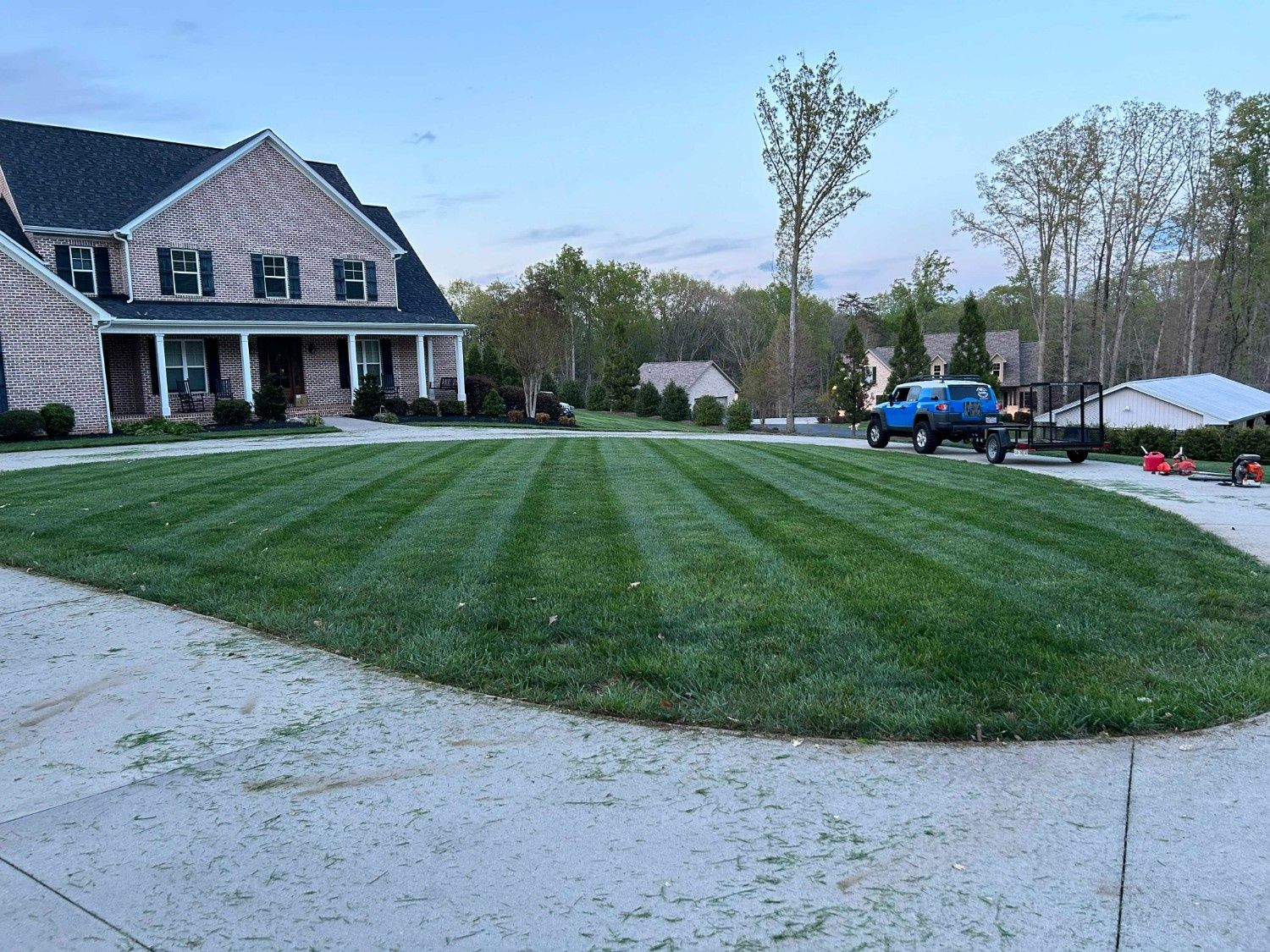
Ground Preparation That Supports Decades of Growth
Sod Installation in Oak Ridge for properties with failed lawns, bare soil after construction, or erosion-prone slopes
Bare soil turns into standing water after every storm, and patchy lawns take years to fill in through seeding alone. Pointer Landscape Solutions installs sod in Oak Ridge for properties that need immediate, uniform grass coverage after construction, heavy lawn damage, or grading work that removed existing turf. The service includes ground preparation to create a stable, level base where sod roots establish quickly and drainage functions correctly from day one.
Installation begins with soil grading to eliminate low spots where water would pool beneath the sod and cause root rot. The existing surface is amended if soil quality tests reveal compaction or poor drainage characteristics common in clay-heavy areas. Sod is laid in staggered seams similar to brickwork, ensuring no continuous lines form where edges could dry out or separate. Each piece is pressed firmly into contact with the soil to eliminate air gaps that prevent rooting.
Arrange an on-site consultation to evaluate soil conditions and determine the amount of preparation required before installation.
What You Notice Once Sod Is Established
Proper sod installation requires root contact across the entire underside of each piece, which means the soil surface must be level and firm but not compacted. Gaps beneath the sod create dry pockets where roots die back, leading to brown patches within weeks. Grading eliminates these pockets and directs runoff away from structures, so water moves across the lawn rather than pooling in depressions.
Within two weeks, roots penetrate the underlying soil and anchor the sod so it no longer shifts underfoot. The lawn becomes usable for light activity within three weeks, and full traffic tolerance develops after six weeks once the root system has grown deep enough to support regular use. The grass maintains consistent color and density across the entire installation because each piece started from the same growing conditions at the sod farm.
Sod provides immediate erosion control on slopes where rain would otherwise wash away seed and topsoil. The installation includes an initial watering schedule that varies based on season and weather, with daily watering required for the first two weeks to prevent drying before roots establish. Once rooted, the lawn transitions to a standard maintenance routine similar to established turf.
Homeowners considering sod installation typically want to understand preparation requirements and establishment timelines.
Questions Before Starting Your Project
What ground preparation is required before sod installation?
The site must be graded to eliminate depressions, cleared of debris and dead vegetation, and amended if soil testing reveals drainage or compaction issues that would prevent rooting.
How soon can you walk on newly installed sod?
Light foot traffic is acceptable after two weeks once initial rooting occurs, but full use should wait until six weeks when the root system has developed enough to handle regular activity.
Why does sod cost more than seeding for the same area?
Sod includes the cost of growing mature grass for twelve to eighteen months at a commercial farm, plus harvest and transportation logistics, while seeding only requires ground preparation and seed application.
What happens if sod dries out during the first two weeks?
Dried sod pulls away from the soil and stops rooting, creating permanent dead zones that require replacement pieces, which is why the initial watering schedule in Oak Ridge must account for heat and sun exposure.
How long does sod last compared to seeded lawns?
Properly installed sod lasts indefinitely with standard maintenance since it establishes a mature root system within weeks, while seeded lawns take two full seasons to develop comparable density and durability.
Pointer Landscape Solutions manages site preparation, sod selection, and installation to match your property's drainage patterns and usage requirements. Contact us to schedule a site evaluation and receive a detailed estimate based on your lawn's specific conditions.